
This page is part of an mirror of © FOTW Flags Of The World website
This website is devoted to the science of vexillology (the study of flags).
All illustrations presented on this website serve exclusively to provide information in the context of vexillology.
The authors and hosts of this site explicitly distance themselfes from any symbols of unconstitutional organizations that may be depicted here.
Last modified: 2026-06-13 by martin karner
Keywords: vexillological terms |
Links: FOTW homepage |
search |
disclaimer and copyright |
write us |
mirrors
On this page:
Please note that, although there is a reported difference in appearance (and of course function) between a
cramp and the parts of some wolf/man traps, they can look very similar (if not identical) and are thus
easily confused, so in its illustrations for the two terms this dictionary can only be guided by published
descriptions.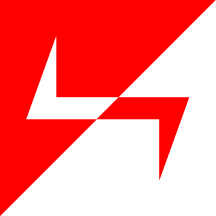
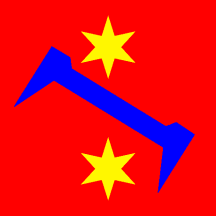
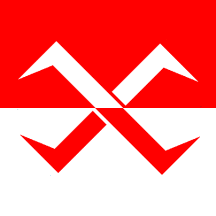
Flag of Welschenrohr-Gänsbrunnen;
Flag of Gerlafingen;
Flag of Biberist, Switzerland
.gif)
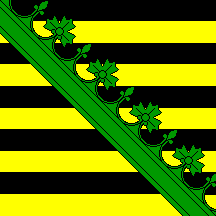
Arms of Saxony, Germany; Royal Standard of the
Kingdom of Saxony 1815–1918
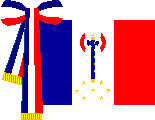
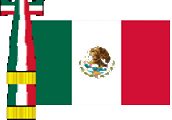
Presidential Standard, France 1940–1943 (fotw & CS);
National Flag of Mexico
Please note with regard to 1) that in French military usage, and possibly in others, the cravat is employed (including use with car flags) to differentiate between ranks and functions (see also fanion 3), jack of honour, lanyard 1) and lanyard pennant.
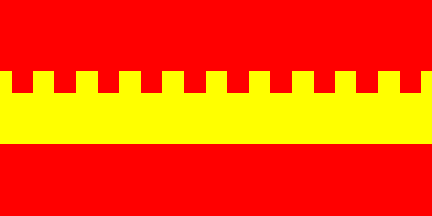
Flag of Judeţul Cahul 1998–2003, Moldova
pc.gif)
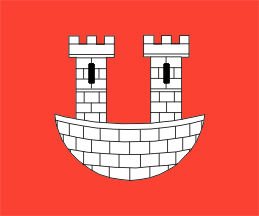
Arms and Flag of Pyskowice, Poland
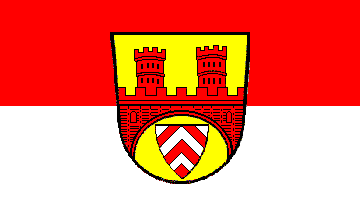
Flag of Bielefeld, Germany
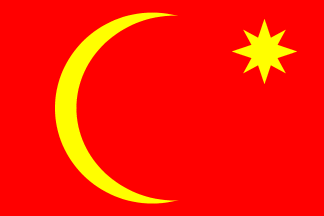
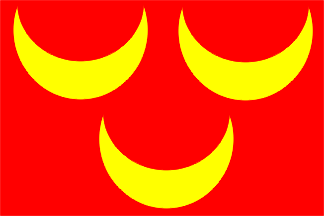
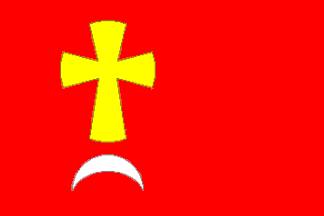
Flag of the Emirate of Ha'il 1835–1920;
Former Flag of Obdam, The Netherlands;
Flag of Odèn, Spain
Notes
a) With regard to 1) the crescent is often (but not invariably) considered to be symbolic of Islam.
b) Regarding 2) a crescent whose horns point downward (as illustrated
above) may be termed inverted or reversed – see reversed 2).
Please note that the term "crest" should only be used as specifically defined in 1), 2), 3)
and 4) above, and should not be considered as a synonym for a
coat of arms or set of
armorial bearings. ![[crest]](../images/v/vx-hr)ka-jo.gif)
![[crest]](../images/v/vx-hmssovereign).jpg)
![[crest]](../images/v/vx-us)nmmil.gif)
Arms of Josipdol, Croatia;
Ship's crest of HMS Sovereign (Wikipedia);
State Military Crest of New Mexico, US
![[crested]](../images/v/vx-ch-fr282.gif)
Flag of Cutterwil, Switzerland
.gif)
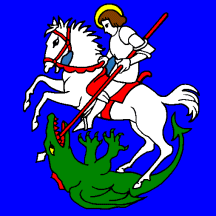
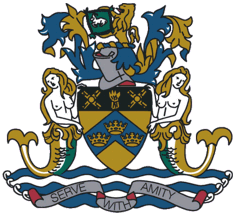
Arms of Portsmouth, England;
Flag of Chermignon, Switzerland;
Arms of Boston Borough Council, England
![[Croatian wattle]](../images/v/vx-hr-ndhum.gif)
Flag of Ustasha Youth 1941–1945, Croatia
![[crown]](../images/v/vx-dk-krone.gif)
![[crown]](../images/v/vx-gb_tudor.gif)
![[crown]](../images/v/vx-crownspain.gif)
Royal Crowns, Denmark,
England and
Spain (Wikimedia)
Notes
a) With regard to 1), a crown with a curved
bar or bars across the top and a cap within generally (but not invariably) signifies
a reigning monarch, however, the actual design will usually be specific
to a given country and considerable variations exist.
b)
Regarding 3), in
heraldry the term "crown" has a wider use than those referenced above, and it
is suggested that a
specialist glossary or dictionary of heraldry be consulted for full details.
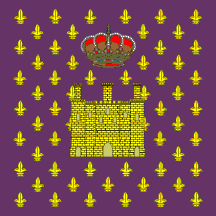
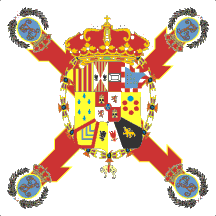
Crown/King’s Colour of the Royal Infantry Guard 1794, Spain;
Crown/Queen’s Colour of the Regiment of Chasseurs Isabel II
1841–1844, Spain
m.gif)
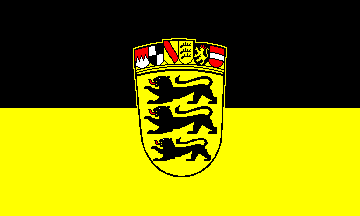
Middle Arms and State Flag of
Baden-Württemberg, Germany
.gif)
Arms of Bruckneudorf, Austria
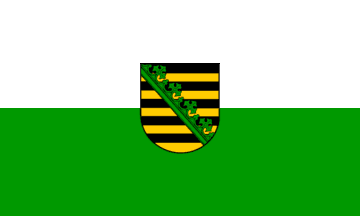
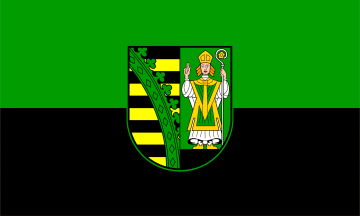
Flag of Saxony, Germany;
Royal Standard of the Kingdom of Saxony 1815–1918;
Flag of Land Hadeln, Germany
.gif)
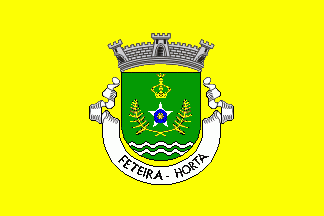
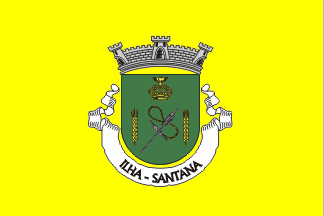
Flag of Ilha, Portugal;
Arms of Santo Espírito, Portugal;
Flag of Feteira, Portugal
![[collar]](../images/v/vx-civiccrown.gif)
(Parker)
l.gif)
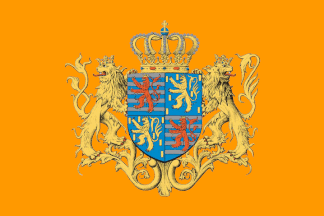
Lesser Arms and Grand-Ducal Standard
of Luxembourg
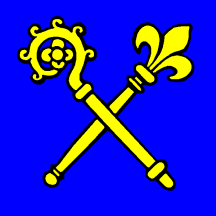
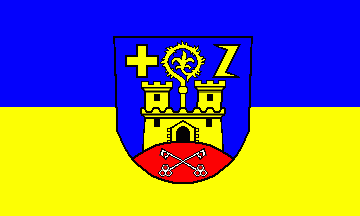
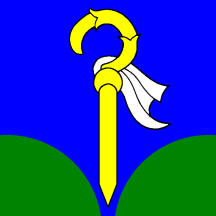
Flag of Schmitten, Switzerland;
Flag of Tholey, Germany;
Flag of Wangen, Switzerland
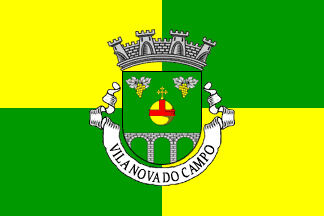
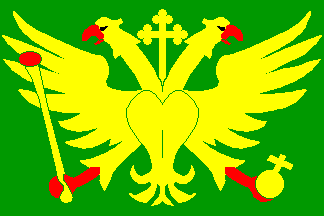
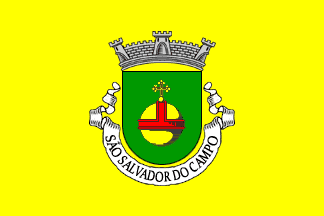
Flag of Vila Nova do Campo, Portugal;
Historical flag of Szamosújvár, Kingdom of Hungary;
Flag of São Salvador do Campo, Portugal
.gif)
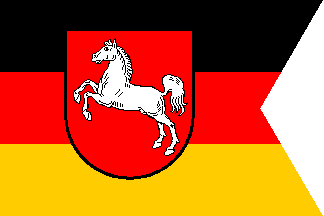
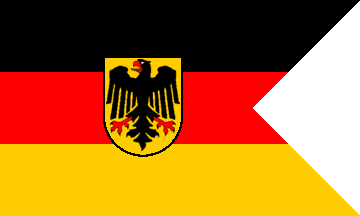
Naval Ensign of Germany;
Arms of Montalegre, Portugal;
State Ensign of Lower Saxony, Germany
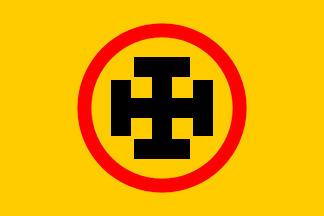
A flag of the Christian Falangist Party, Germany
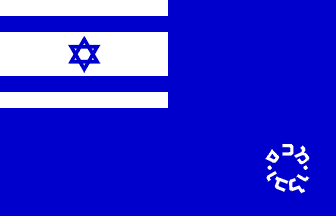
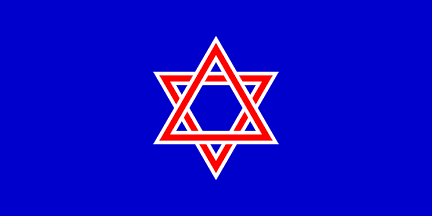
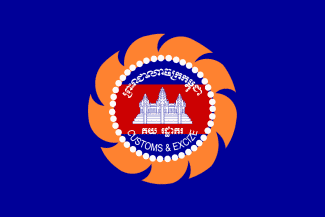
Customs Flag/Jack,
Israel; Customs Flag, Sudan;
Customs Flag, Cambodia
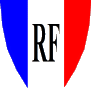
Cypher of the French Republic (CS)
Introduction | Table of Contents | Index of Terms | Previous Page | Next Page
Advertisement from our sponsor:
Bei Fahnenversand.de erhalten Sie eine Vielzahl an hochwertigen Flaggen, Pins und Aufnähern, zum Beispiel:


![[crew's meal pennant]](../images/v/vx-sig~chow.gif)
