This page is part of an mirror of © FOTW Flags Of The World website
This website is devoted to the science of vexillology (the study of flags).
All illustrations presented on this website serve exclusively to provide information in the context of vexillology.
The authors and hosts of this site explicitly distance themselfes from any symbols of unconstitutional organizations that may be depicted here.
Last modified: 2020-08-29 by  klaus-michael schneider
Keywords: willstaett | cross(yellow) | damascene | swan |
Links: FOTW homepage |
search |
disclaimer and copyright |
write us |
mirrors
![[Willstätt municipal banner]](../images/d/de-og-ws_.gif) 5:2
5:2  image by Jörg Majewski, 25 Aug 2020
See also:
image by Jörg Majewski, 25 Aug 2020
See also:
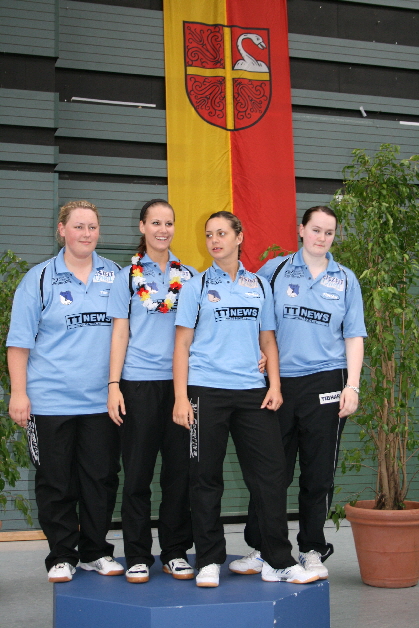
It is a yellow-red vertical bicolour. The coat of arms is shifted to the top.
Source: this photo
Klaus-Michael Schneider, 25 Aug 2020
Shield Gules parted by a cross Or, the 2nd quarter displays a sinister facing swan issuant Argent.
Meaning:
Willstätt had been a fortified village since 1254. It became a possession of the Counts of Lichtenberg in 1288, and later of their heirs, the Counts of Hanau. It was seat of a district until the 18th century. The arms are based on a local seal from 1444. The damascene from the seals was kept. The swan is taken from the crest of the arms of the Counts of Lichtenberg.
Source: Stadler 1971, p.114
Klaus-Michael Schneider, 25 Aug 2020
The arms were adopted in 1901. The banner was approved on 22 November 1984 by the county administration, published in GABl 402/1985.
Klaus-Michael Schneider, 25 Aug 2020
back to Ortenau cities and municipalities click here
Advertisement from our sponsor:
Bei Fahnenversand.de erhalten Sie eine Vielzahl an hochwertigen Flaggen, Pins und Aufnähern, zum Beispiel: